
Fur, scales, fins, or feathers, everyone has a story!
Housing Sitch 3
Transcript
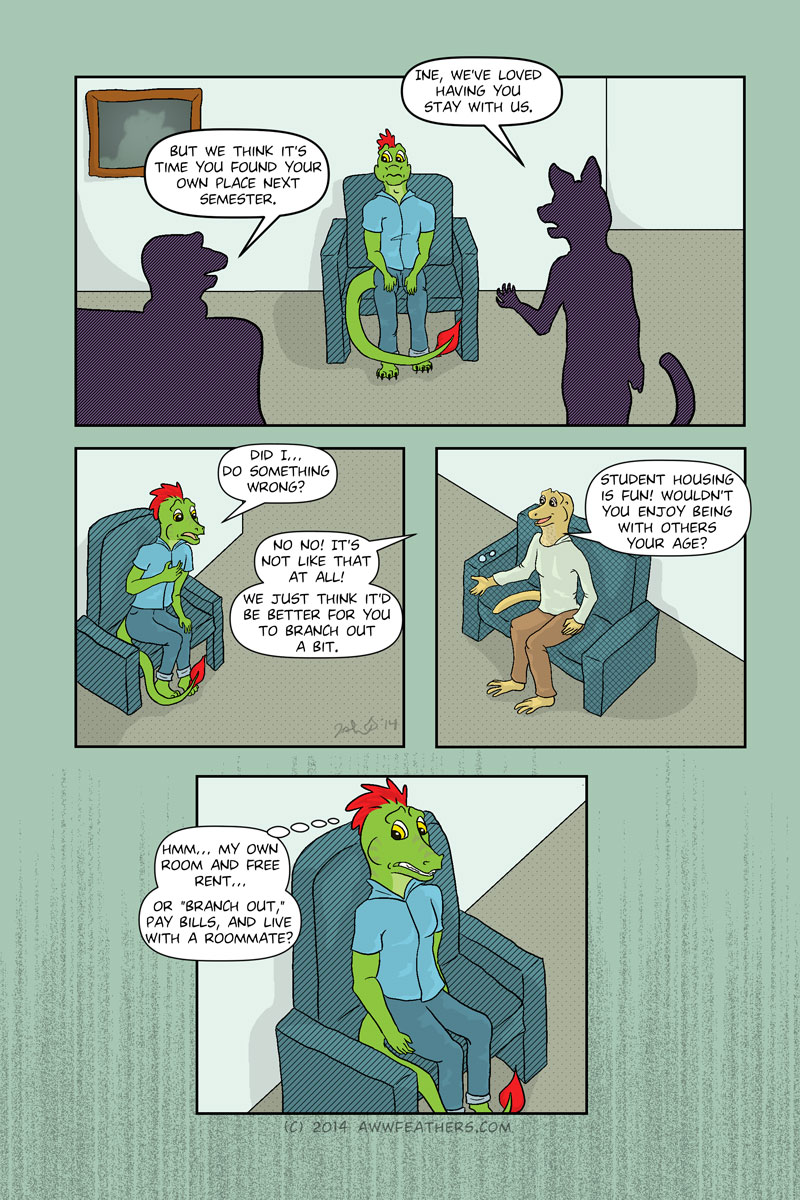
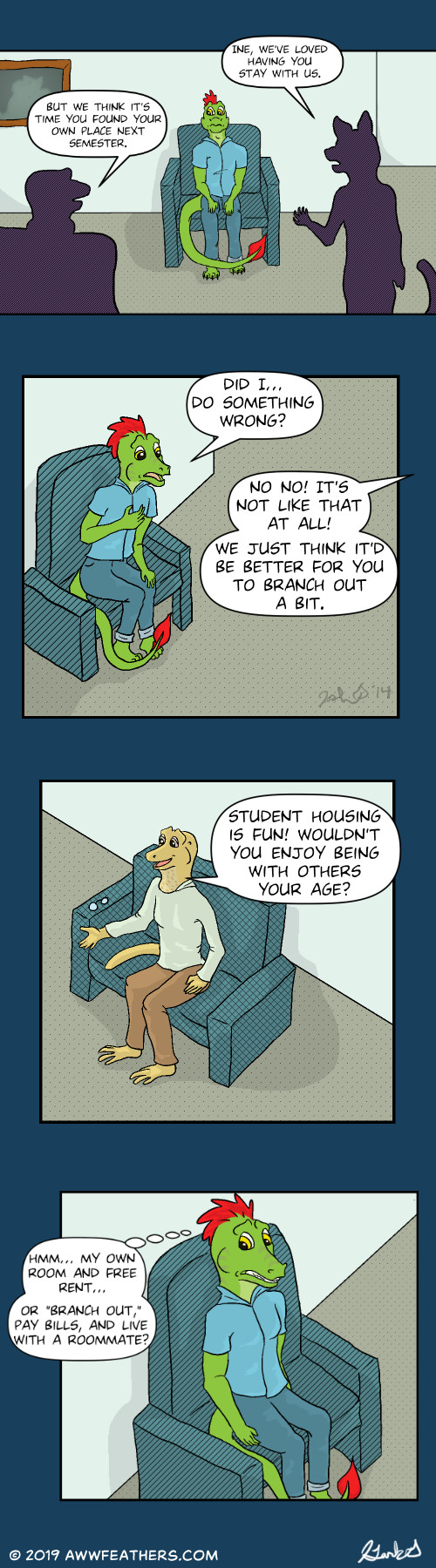
Ine sits in a chair across from his aunt and uncle, looking uncomfortable. His aunt says, "Ine, we've loved having you stay with us." His uncle says, "But we think it's time you found your own place next semester." Ine looks sad and asks, "Did I… do something wrong?" His uncle smiles kindly and says, "No no! It's not like that at all! We just think it'd be better for you to branch out a bit. Student housing is fun! Wouldn't you enjoy being with others your age?" Ine grimmaces and thinks, "Hmm… my own room and free rent… or 'branch out,' pay bills, and live with a roommate?
Lark says…

Behind the Scenes
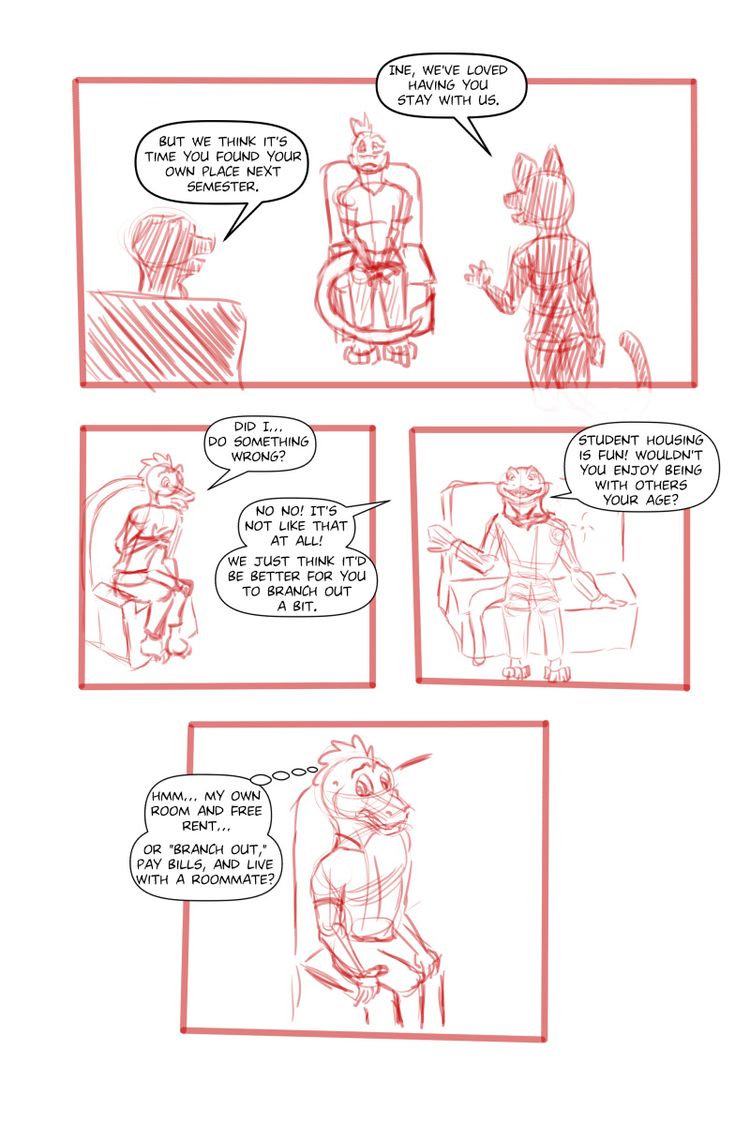
Can anybody tell that Ine’s uncle is supposed to be a bearded dragon? 😅 I think I could draw a much better anthro beardie these days. We’ll see if Unlce Lane ever makes a comeback. I do have a fondness for beardies after all. 🧡
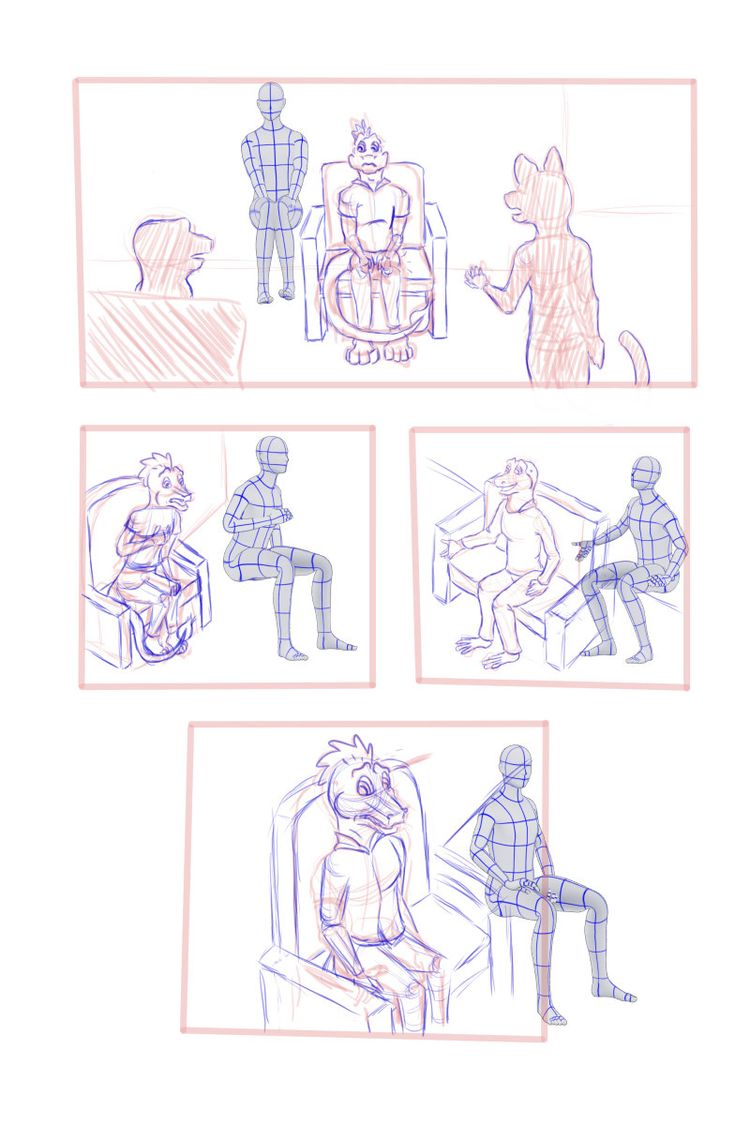
Here’s another example of using the 3D mannequins for pose reference. As you can see, I switched the third panel from the front view in the first draft to 3/4 view in the final. The 3/4 view used to intimidate me a lot, but visual references help a ton. Seriously, use references! Whether it’s a digital or physical pose mannequin or a photograph, just about anything is better than nothing!
I’ve also noticed that when I draw from a reference, my poses get much more dynamic and expressive, such as the way Ine’s nervousness is conveyed in the first panel by the way he has his knees pulled together and is clasping his hands in his lap, and the way he leans forward in the second panel rather than just remaining sitting up straight.
It can be tricky to know what to do with a scene where the characters are mostly just talking back and forth. I could have just showed his aunt’s face, his uncle’s face, Ine’s face, uncle’s face, etc. but that would be rather bland. Instead, I try to change things up to keep them visually interesting. A brilliant resource for this kind of thing is Wally Wood’s 22 Panels that Always Work. This page isn’t exactly a stellar example, but I used the silhouette technique in the first panel, and since there are only four panels on this page, that still helped.
Speaking of the number of panels, I used to feel kind of bad for going from full-page updates to half-page updates. But then I realized that I’m filling my pages much more now. Having only four or five panels per page used to be pretty common, but now I almost always have at least eight, so my half-pages are about as much content as my full-pages from five years ago!
Published: May 28, 2014
And you'll just LOVE eating ramen every day instead of all these home-cooked meals!